

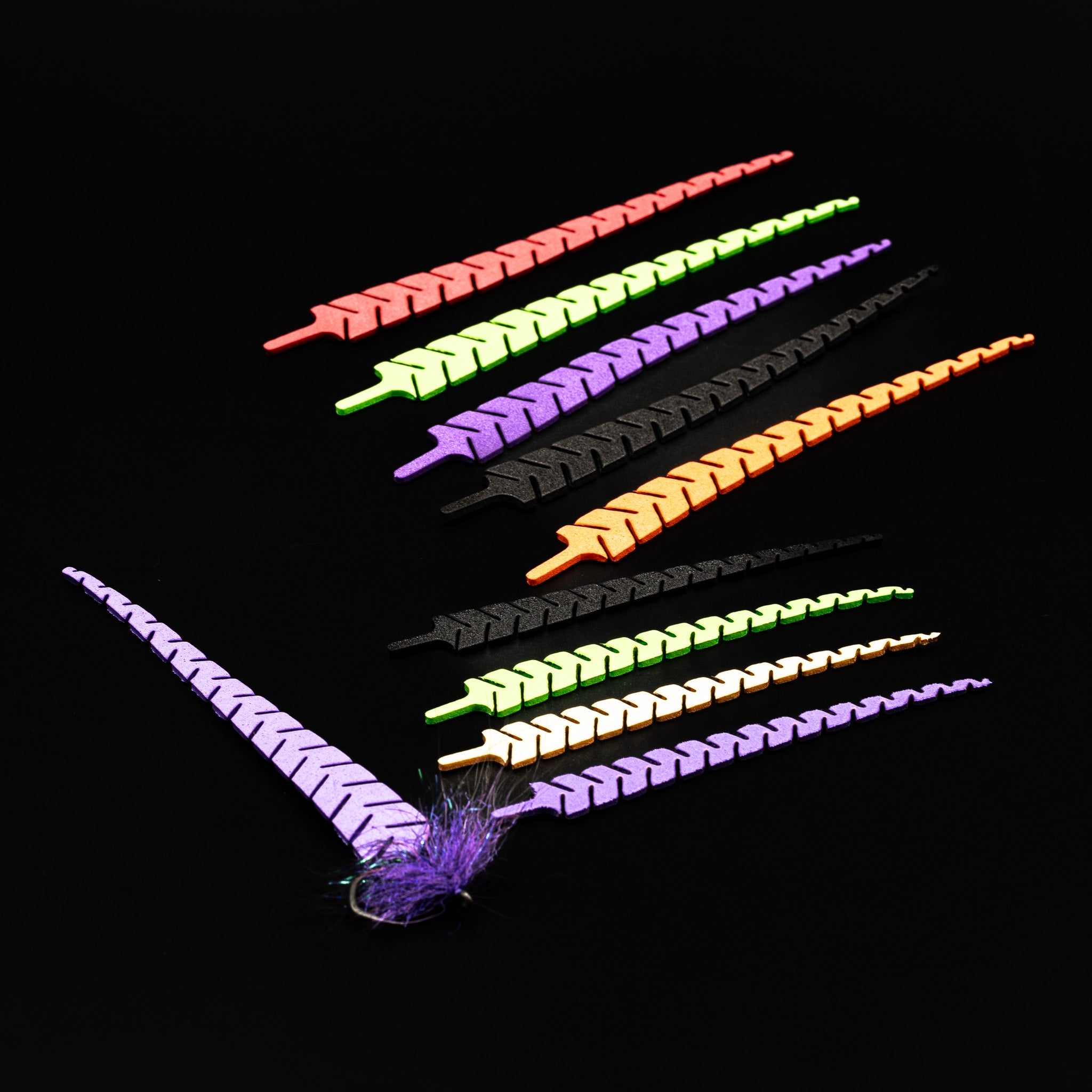
If your flies aren’t getting eaten the way they should, the problem usually isn’t your cast, your retrieve, or even your location.
It’s your tail material.
Most anglers overlook it, but the tail controls how your fly moves, how it holds its profile, and how natural it looks in the water. When that part fails, everything else fails with it.
This is exactly why we created the Cajun Gator Tail — a material designed to fix the most common issues anglers run into with traditional fly tails. But before getting into that, it’s important to understand what’s actually going wrong.
Dead Movement Is Killing Your Flies
A lot of standard materials look great in your hand but fall apart in the water. They hold too much water, collapse on the pause, and lose all natural movement.
Fish key in on subtle motion. When a tail stops breathing and reacting naturally, the fly stops looking alive. That’s when you start getting follows instead of eats.
Fouling Ruins Presentation
You can make a perfect cast and still be fishing a useless fly if the tail wraps around the hook.
Fouling is one of the most common issues in fly tying, especially with softer materials. It causes spinning, unnatural tracking, and inconsistent presentation — and most of the time you won’t even realize it’s happening.
Profile Matters More Than You Think
Some materials are too bulky and push water in an unnatural way. Others are too thin and disappear completely.
The best flies sit right in the middle — enough profile to be seen, but not so much that they look unnatural. That balance is what triggers confidence eats.
What a Tail Material Should Actually Do
A good tail material should move without constant stripping, hold its shape in the water, resist fouling, and not absorb so much water that it kills your cast.
That combination is what separates a fly that looks good at the vise from one that actually produces on the water.
Where Cajun Gator Tail Fits In
The Cajun Gator Tail was built specifically to solve these problems.
It maintains a clean profile instead of collapsing. It sheds water quickly so your fly casts easier. It creates natural movement even on the pause. And most importantly, it reduces fouling so your fly tracks correctly every time.
The result is a fly that looks alive from the moment it hits the water to the end of every strip.
The Bottom Line
If your flies aren’t working, don’t immediately change spots or patterns.
Start with your materials.
The tail is one of the most important parts of the fly, and upgrading it can completely change how your fly performs, how it moves, and how often it gets eaten.
Because fish don’t care how your fly looks in your hand.
They care how it moves in the water.
Shop the fly-tying materials built to fix these problems: Fly Tying Materials · Cajun Gator Tail
See what these materials tie: Redfish Flies · Tarpon Flies