

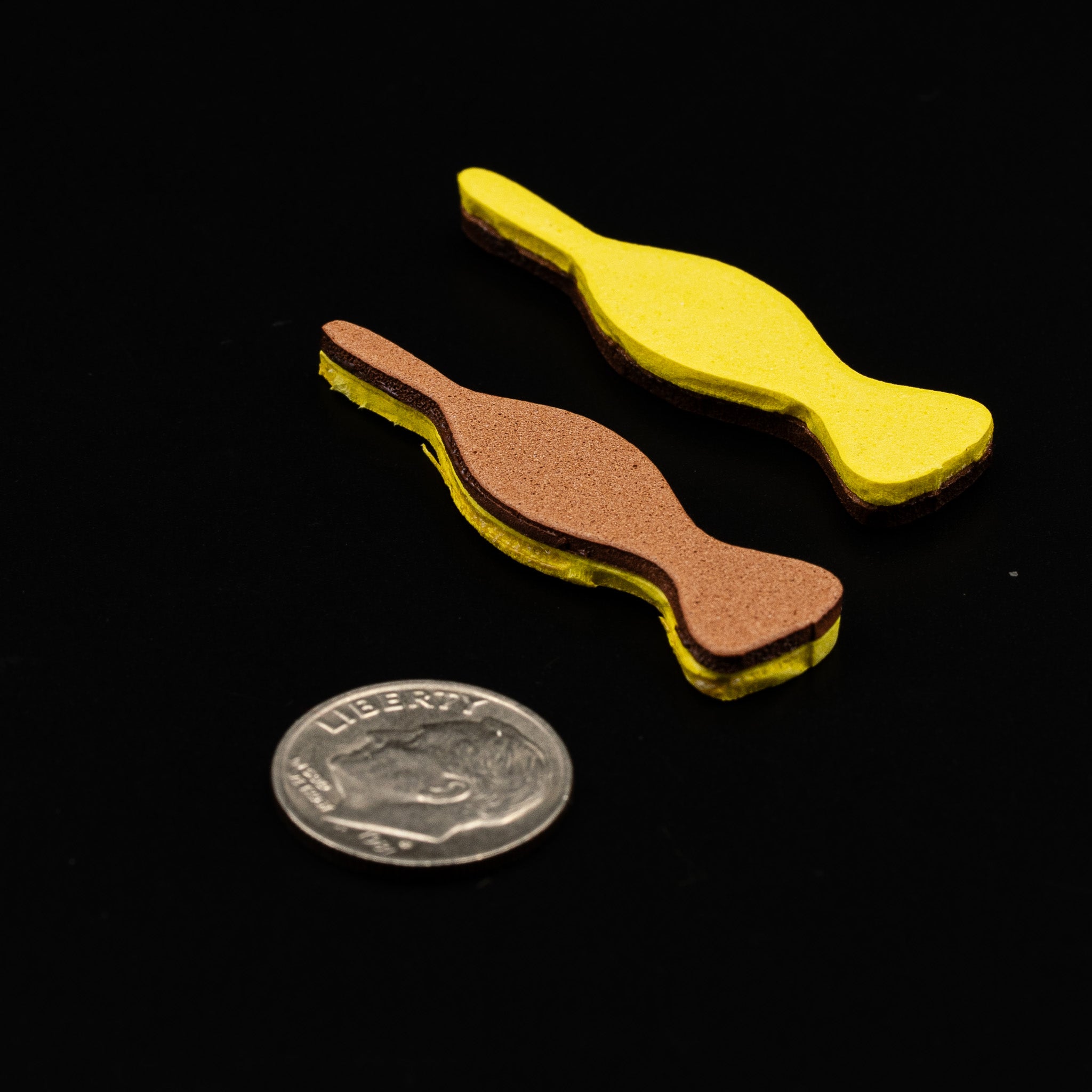
Foam has become one of the most important materials in modern fly tying—and for good reason.
It floats better, lasts longer, and creates a profile fish can’t ignore. But not all foam performs the same, and that’s where most anglers go wrong.
If your foam flies aren’t sitting right, landing clean, or holding up after a few fish, the issue usually isn’t your pattern.
It’s the foam.
The Problem With Most Foam
A lot of foam on the market is inconsistent. It’s either too soft, too stiff, or breaks down too quickly.
Soft foam collapses and loses shape. Stiff foam doesn’t move naturally. Cheap foam tears, stretches, and fails after a handful of fish.
That inconsistency leads to poor floatation, bad hook angles, and flies that just don’t look right in the water.
Why Foam Matters More Than You Think
Foam doesn’t just keep your fly afloat—it controls how your fly lands, how it sits, and how it moves.
In topwater patterns especially, foam is the foundation of the entire fly. If that foundation is off, everything else is off.
This is why serious tyers pay attention to density, cut, and durability—not just color.
What Good Foam Should Actually Do
The right foam should be consistent in density, easy to work with, and durable enough to handle multiple fish without breaking down.
It should cut clean, hold its shape, and provide the right balance between floatation and movement.
When you get that right, your flies land softer, sit better, and fish longer.
Where FINATICS Foam Fits In
At FINATICS, we build foam for real-world fishing—not just how it looks in a package.
From pre-cut bodies to legs and specialty materials like Cajun Gator Tail, everything is designed to hold shape, resist tearing, and create consistent, repeatable flies.
If you’re tying topwater patterns, upgrading to purpose-built foam can completely change how your fly performs—from how it lands to how it moves on the pause.
Shop all foam materials here: Foam Collection
See Cajun Gator Tail here: [Cajun Gator Tail]
Built for Real Patterns
Whether you’re tying frogs, gurglers, hoppers, or custom topwater designs, foam plays a critical role in how those flies behave.
The right material gives you control over profile, buoyancy, and durability—three things that directly impact whether fish commit or refuse.
Foam patterns work everywhere: Panfish Flies · Bass Flies · Poppers
The Bottom Line
Foam isn’t just another material—it’s one of the most important decisions you make when tying a fly.
If your flies aren’t floating right, sitting right, or lasting long enough, upgrading your foam is one of the fastest ways to fix it.
Because when the foundation is right, everything else falls into place.